The Substance Abuse Speaker Who Has Been the Patient, the Marketer, the Consultant, and the Owner
In their darkest hour, why would someone choose you over the center down the street?
Adam Vibe Gunton is the substance abuse speaker who shows real estate developers, investors, and entrepreneurs how to turn property into an addiction treatment center: a cash-flowing operating asset that saves lives. He has been the patient, the marketer, the consultant, and the founding partner, and he teaches audiences how to build a center that is different from day one and fills without buying a single lead.
As Seen On

















What A Substance Abuse Speaker Does &
How Real Estate Fits Adam's Message
A substance abuse speaker shares lived experience and education about addiction to humanize a health issue that still carries stigma, and adapts that message to the room, whether it is a school, a workplace, a hospital system, or a conference of business leaders. The best speakers use person-first language, avoid clinical jargon, bring evidence, and leave the audience with something to do. Adam holds himself to all of that. He never reduces a human being to a label, and he brings the data: roughly one in ten Americans over age 12 lives with an alcohol use disorder, about half have used an illicit drug at some point in their life, and overdose deaths climbed at nearly 4 percent a year for two decades.
Where Adam differs from most speakers is what he does with those numbers. Most substance abuse speakers ask the room to care. Adam shows the room how to build the thing that answers the problem: a treatment center that people can find, trust, and choose.
That is where real estate enters the message. Every one of those statistics is a person who will need a bed, and every bed sits inside a building someone had to acquire, develop, license, and open. The people who already know how to do the first two steps, the developers, investors, and entrepreneurs in the room, are closer to solving this crisis than they realize. Adam’s talks show them how a property becomes a treatment center, how a treatment center becomes a cash-flowing operation, and how that operation becomes the reason a family gets their person back. Awareness is the floor. Admissions are the goal. Real estate is the bridge between them.
"You Can Copy One Rehab's Homepage Onto Another, Swap the Name, and Nothing Changes"
That is the problem with this industry, and almost none of the speakers on a conference stage will say it.
The mechanics of opening a treatment center are the same for everyone. Licensing, accreditation, staffing, payer contracts. Nobody wins on mechanics. Centers fill because someone decided, before the first license was filed, exactly why a person at the worst moment of their life would pick up the phone and call them instead of anyone else. That decision is the whole game. Most operators never make it, and then they wonder why the beds are empty while drugs and alcohol keep winning in their own community. A successful center is not the one with the best clinical talent on paper; it is the one a frightened family can find, trust, and choose.
Adam has stood on every side of this business. That is the real world expertise he brings to every stage, and it is why audiences leave with a plan instead of a feeling. Inspiration is easy to find at a conference. A job to do on Monday morning is not, and that is what Adam hands the room.

A Keynote Speaker for Two Audiences
Who Need the Same Answer
For Real Estate Developers, Brokers, and Entrepreneurs
You own the property, or you know how to get it. You have heard addiction treatment is a successful business and assumed it was out of reach: too clinical, too regulated, too risky for someone outside healthcare. It is not. The mechanics are learnable and identical for every operator. What decides the outcome is whether you build something different from the first day, and that is a business and branding question, not a medical one.
A well-launched center runs at roughly $800 per bed per day with a 22 to 25 percent margin at 80 percent occupancy. Every one of those beds is a person getting their life back: a job, a future, children who get their parent home, and a family that stops waiting for the phone call every parent dreads. I have never found another asset class where the cash flow and the mission point in the same direction this cleanly.
For Treatment Center Owners Who Cannot Fill Their Beds
You have empty beds and a brand that looks like everyone else’s. Those are the same problem. You do not have a lead problem; you have a differentiation problem, and AI has changed how families search for addiction treatment and decide who to trust with someone they love. Identical brands are invisible to people and to the machines that now answer their questions. A wonderful clinical team cannot fill a center nobody can find.
Adam speaks to this audience as a keynote speaker and a mental health advocate who has watched the industry from both sides of the admissions call. He knows what a family typing “drugs” and “help” into a phone at two in the morning actually needs to see, because he was once the person doing the typing. His talk hands your team more working recovery marketing strategies than they can implement alone, built on the same approach that filled 68 beds with organic calls and no purchased leads.
Real Estate Turned Into a Treatment Center
That Filled in 17 Months


Adam is a founding partner of Radix Recovery in Cedar Rapids, Iowa. This is what happens when a center is built different from day one.
- March 2025: outpatient opens. 40 organic calls a month from the first week.
- November 2025: 68 residential beds open. Over 550 organic calls a month.
- March 2026: the center covers its own costs.
- August 2026: full with a wait list, and planning an expansion of four or more locations.
No purchased leads. No call center. A brand that answered the darkest-hour question before the doors opened, and a team that followed the plan.
Three Keynotes Built on a 10 / 80 / 10 Structure
Every talk Adam gives follows the same structure. The first ten percent captivates the room and shows the audience exactly who they are working with: a man who was once the person calling treatment centers from the floor, and is now the one helping build them. The middle eighty percent is the meat: numbers, strategies, and the decisions that separate the centers that fill from the ones that stall. The last ten percent is the call to action and the closing story that brings it home. Event organizers know exactly what they are getting, and audiences leave with knowledge they can put to work Monday morning.
How To Open A Rehab Center Successfully in 2027
The honest roadmap. Adam walks the room through every mechanical step in the order it actually happens, from site selection and licensing to accreditation, staffing, and payer contracts, and shows where the brand decisions sit inside that timeline. He names the mistakes that sink first-time operators before they admit a single client, and the handful of choices that make a launch successful before the doors open.
Turning Real Estate Assets Into 100x Cash Flowing Operations
The reframe talk for real estate developers, investors, and entrepreneurs. Adam shows how a property becomes an operating asset with a mission attached: the unit economics of a well-run center, what occupancy does to margin, and why the demand is already sitting in every market in the country. Then he gets to the one variable the spreadsheet cannot capture, the reason a family chooses one center over another, and shows the room how to build for it from the first day.
Filling A Rehab Center's Beds In The Age Of AI
The census talk for owners and executives. Adam explains how families now find and choose a center, why identical brands are invisible to both people and the AI tools answering their questions, and runs the copy-paste homepage test live on stage. The room leaves with the strategies that took one center from 40 to over 550 organic calls a month, and a clear picture of which ones to implement first.
Not A Motivational Speaker
There are wonderful motivational speakers in addiction recovery, and the world needs them. They inspire a room, and the room goes home. Adam is after something different. He wants the developer to leave with a deal thesis, the owner to leave with a brand strategy, and the family a year from now to find a treatment center that was built to serve them. Motivation that does not change what someone does on Monday is entertainment. Adam is there to create positive change that can be measured in admissions, and he engages every audience with the same message: the future of this industry belongs to the people willing to be different.
“I Know What Your Client Is Thinking When They Walk In. I Was That Client.”
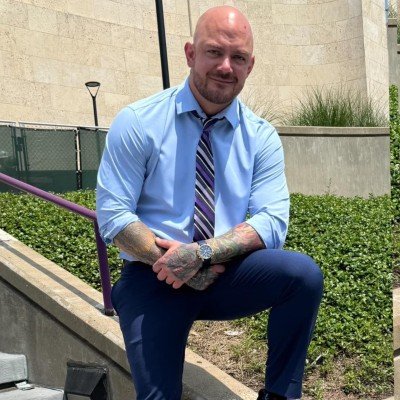
Adam Vibe Gunton
Founder of Recovered On Purpose & Behavioral Health Partners